
Winter whispers through the trees,
With frosty breath and quiet ease.
Snowflakes dance on winds so cold,
A tale of beauty, soft and bold.
The world is draped in blankets white,
Stars above twinkle through the night.
Frost-kissed windows, icy and clear,
Hold the magic of the year.
Bare branches reach for skies of grey,
While winter’s breath keeps night at bay.
In the stillness, peace is found,
As snow falls gently to the ground.
The world sleeps under frosty skies,
While winter’s song in silence flies.
A season wrapped in purest grace,
With quiet joy and soft embrace.
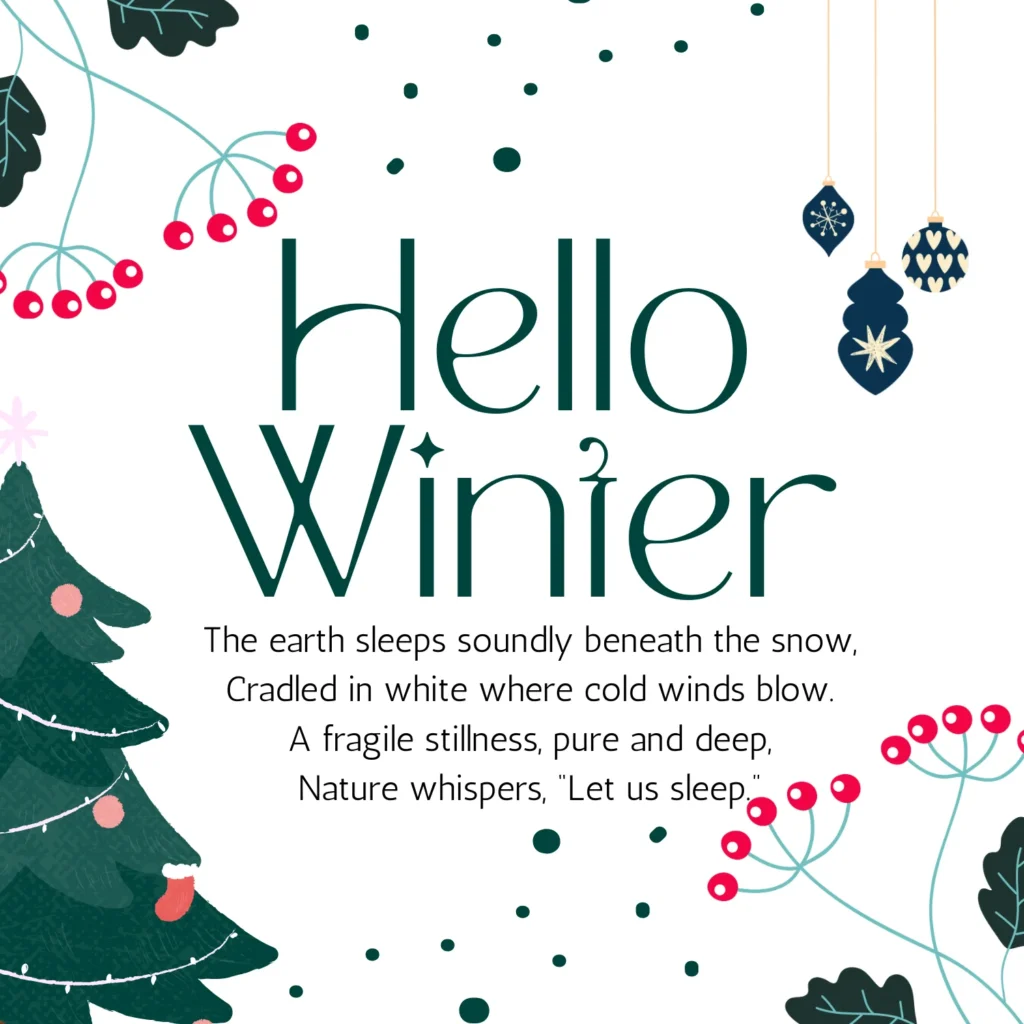
A sad poem about winter
Winter comes with silent grief,
A world of cold beyond belief.
The skies are heavy, grey with sorrow,
As hopes fade like the light of tomorrow.
The frost bites deep into the skin,
While shadows stretch, and hearts grow thin.
Bare trees stand like forgotten souls,
Empty branches, aching holes.
The snow falls soft, but none can see
The tears that freeze inside of me.
A blanket of white, a mask for pain,
Covering the loss that will remain.
The wind, a mournful, haunting sound,
Whispers of joy that’s never found.
In winter’s grasp, we all grow still,
Frozen by a cold we can’t fulfill.
A happy poem about winter
Winter comes with sparkling cheer,
Bringing laughter, bright and clear.
Snowflakes twirl in joyful flight,
Dancing in the soft moonlight.
Frosty breath and rosy cheeks,
Whispers of the warmth we seek.
The world aglow with glistening white,
A winter wonder, pure delight.
Children’s voices fill the air,
Building snowmen everywhere.
Hot cocoa in our hands so warm,
Bundled close to ride the storm.
Stars above, so crisp, so bright,
Guiding us through peaceful night.
Winter wraps the world in bliss,
A season of joy, of warmth, of this.
rhyming words with winter
Here are some words that rhyme with “winter”:
- Splinter
- Printer
- Glinter (a rare word, but used poetically for shining or glittering)
- Sprinter
- Inter (as in to bury, or used in poetry)
- Hinder
- Center (alternative spelling: “centre” in British English)
Though perfect rhymes for “winter” are uncommon, you can use slant rhymes or near rhymes for creative flexibility.
How to write a poem about winter?
Writing a poem about winter can be a fun and expressive way to capture the essence of the season. Here’s a simple guide to get you started:
1. Choose a Theme or Mood
- Decide if you want your poem to be joyful, sad, reflective, or peaceful.
- Do you want to focus on the beauty of winter, the coldness, or how people interact with the season?
2. Gather Sensory Details
- Think about how winter looks, sounds, feels, smells, and even tastes.
- Sight: Snowflakes, frosty trees, bare branches.
- Sound: Crunching snow, howling wind, silence of snow-covered ground.
- Touch: Cold air, warm blankets, frosty windows.
- Smell: Crisp air, wood burning in a fireplace.
- Taste: Hot chocolate, cinnamon, or chilly breath.
3. Create Imagery
- Use descriptive language to paint vivid pictures in the reader’s mind.
- Instead of just saying “cold,” describe the biting chill, the numbing frost, or the icy wind.
4. Use Rhyme or Free Verse
- If you like structure, choose a rhyming scheme like AABB or ABAB.
- Or, if you prefer freedom, go with free verse, where you don’t have to worry about rhyme but focus on rhythm and flow.
5. Play with Emotions
- How does winter make you feel? Is it nostalgic, peaceful, lonely, or energizing?
- Use these emotions to connect with the reader.
6. Write the First Draft
- Don’t worry about perfection. Let the words flow and explore different ideas.
- Once you have your first draft, read it aloud to see if it sounds how you imagined.
7. Edit and Refine
- Trim unnecessary words, improve your imagery, and adjust the rhythm.
- Ensure the poem matches the mood and theme you intended.
Example Poem:
Here’s a quick example using some of the tips:
Winter’s Embrace
The sky wears a cloak of deepest grey,
As snowflakes drift and dance and sway.
Cold winds whisper through the trees,
A frozen kiss on the evening breeze.
The world is hushed in soft repose,
Where icy rivers gently flow.
The fire’s warmth, the frosty night,
Wraps us in its silver light.
Feel free to experiment with these elements and let your creativity guide you!
Winter as a Literary Symbol: More Than a Season
In literature and poetry, winter is never just cold weather. It is one of the most richly symbolic seasons in the human imagination — representing death, dormancy, isolation, hardship, but also stillness, clarity, beauty, and the promise of eventual renewal. Poets across centuries and cultures have returned to winter because it is the season that strips the world back to essentials. The bare trees, the frozen ground, the short days and long nights — all of this becomes a canvas for exploring some of life’s deepest questions.
Winter poetry spans an enormous emotional range. At one end, there is the cosy celebration of snow and firesides, warmth found in the cold. At the other, there is the bleakness of winter as a metaphor for grief, depression, or the end of things. The most interesting winter poems live somewhere in the middle — acknowledging both the harshness and the austere beauty, finding meaning in the tension between them.
How to Experience and Appreciate Winter Poetry
Read winter poetry on winter days, if you can. The season creates a particular quality of light, a particular quality of silence, that these poems are written in and about. Notice how different poets respond to the same season in different ways — some with wonder, some with dread, some with acceptance, some with longing for spring. These differences reveal as much about the poets as they do about winter itself.
Pay attention to colour and light in winter poems. The palette of winter — white, grey, silver, the pale gold of winter sun — is specific and evocative. Poets use these colours deliberately. Darkness comes early in winter, and the quality of winter light has a kind of crystalline precision that summer light lacks. When you notice a poet describing light on snow or the blue shadows in a snowdrift, you are seeing careful observation transformed into art.
The Literary Tradition of Winter Poetry
Some of the greatest poems in the English language are winter poems. Robert Frost’s “Stopping by Woods on a Snowy Evening” captures the hypnotic beauty of winter and the pull of rest against the demands of life. Thomas Hardy’s “The Darkling Thrush” finds an unexpected note of hope in the bleak January landscape. Shakespeare used winter to represent old age and decline in his sonnets. Wallace Stevens wrote a complex philosophical sequence, “The Snow Man,” about the human mind stripped bare, like winter itself.
In Japanese literature, the haiku tradition has always paid special attention to winter — its particular moments, its precise sensory details, its emotional resonances. Bashō and other haiku masters showed how much could be said in three lines about frost, bare branches, or the first snow. This tradition of close, loving attention to winter’s details has influenced poets worldwide.
Literary Devices That Capture Winter in Poetry
Personification is irresistible in winter poetry — winter as a tyrant, a thief, a nurse, or a teacher. This gives the season agency and allows the poet to engage with it as a force rather than merely a backdrop. Pathetic fallacy — using weather to reflect emotional states — is central to winter poetry: a cold landscape mirrors a cold heart, a frozen world mirrors a frozen will.
Sound devices matter especially in winter poems. The crunch of snow, the hush of falling flakes, the crack of ice — these sounds are unique and evocative. Sibilance (the repetition of “s” sounds) can create the soft, hissing quality of snowfall. Harsh consonants can capture the bite of wind. Reading winter poetry aloud brings these sonic effects to life in a way that silent reading misses.
What Winter Poetry Teaches Us
Winter poetry teaches us to find value in the difficult seasons — both literal and metaphorical. It teaches us that there is beauty in austerity, meaning in emptiness, and that stripping away the excess can reveal what is essential. The bare tree is not less beautiful than the leafy one; it is differently beautiful, and winter poetry trains our eye to see that difference.
It also teaches us patience and faith in cycles. Winter is not permanent; it is part of a rhythm. The best winter poems hold both the present cold and the remembered (or anticipated) warmth, and this double vision is a form of wisdom. Reading winter poetry, we learn to endure our own winters — our difficult seasons — with more grace, knowing that they are not the whole story.